The Difference Between Gregorian & Hindu Calendars
Most of the modern world uses the Gregorian calendar, which tracks the Earth's orbit around the Sun (approximately 365.2422 days per year). Hindu festivals, on the other hand, follow a sophisticated luni-solar calendar (Panchang) that balances both lunar phases and solar cycles.
| Feature | Gregorian Calendar | Hindu Luni-Solar Panchang |
|---|---|---|
| Primary Celestial Body | Sun (Solar Cycle) | Moon & Sun (Luni-Solar) |
| Days in a Year | 365 Days (366 in Leap Year) | 354 Days (Approx. 384 in Adhik Maas) |
| Measurement Unit | Fixed 24-Hour Day | Tithi (Moon Phase Angular Distance ~19 to 26 hrs) |
| Diwali Rule | Shifts between Oct 15 & Nov 15 | Always on Kartik Krishna Amavasya |
The Role of Kartik Amavasya
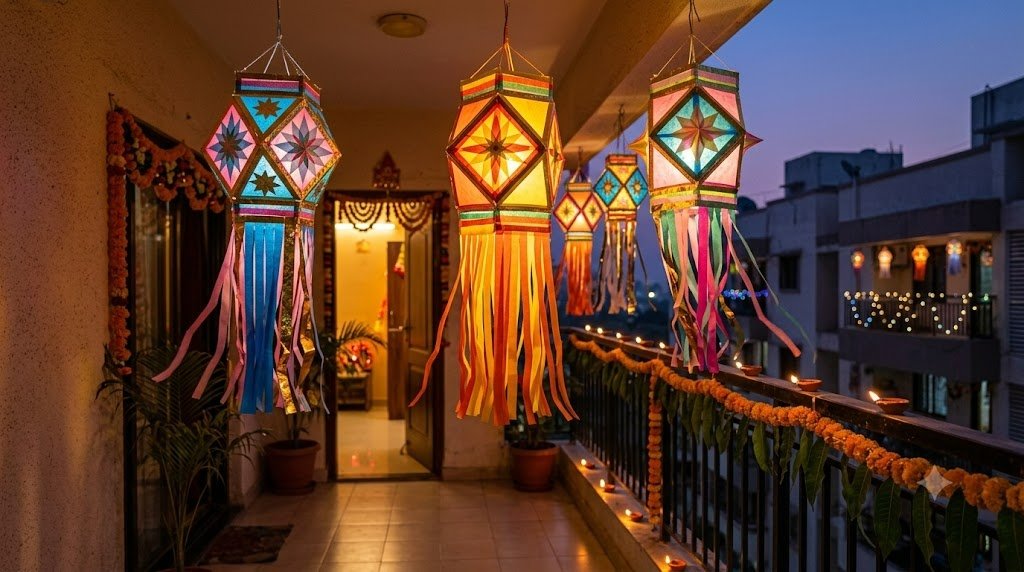
The festival of lights is fundamentally celebrating the banishment of spiritual darkness. In Hindu cosmology, the night of Amavasya (new moon) in the holy month of Kartik is regarded as the darkest night of the autumn cycle. To dispel this dense darkness, millions of oil diyas are lit, symbolizing the light of inner consciousness and prosperity entering the home.
Historical Diwali Dates Comparison
Observe how Diwali shifts across the Gregorian calendar across consecutive years:
- 2023: November 12 (Sunday)
- 2024: October 31 / November 1 (Thursday/Friday) — shifted 12 days earlier
- 2025: October 20 (Monday) — shifted 11 days earlier
- 2026: November 8 (Sunday) — jumped forward due to intercalary corrections!
Plan Ahead for Diwali 2026 Celebrations
Take advantage of verified panchang muhurat timings, book trusted festive services, and generate customized greeting cards.